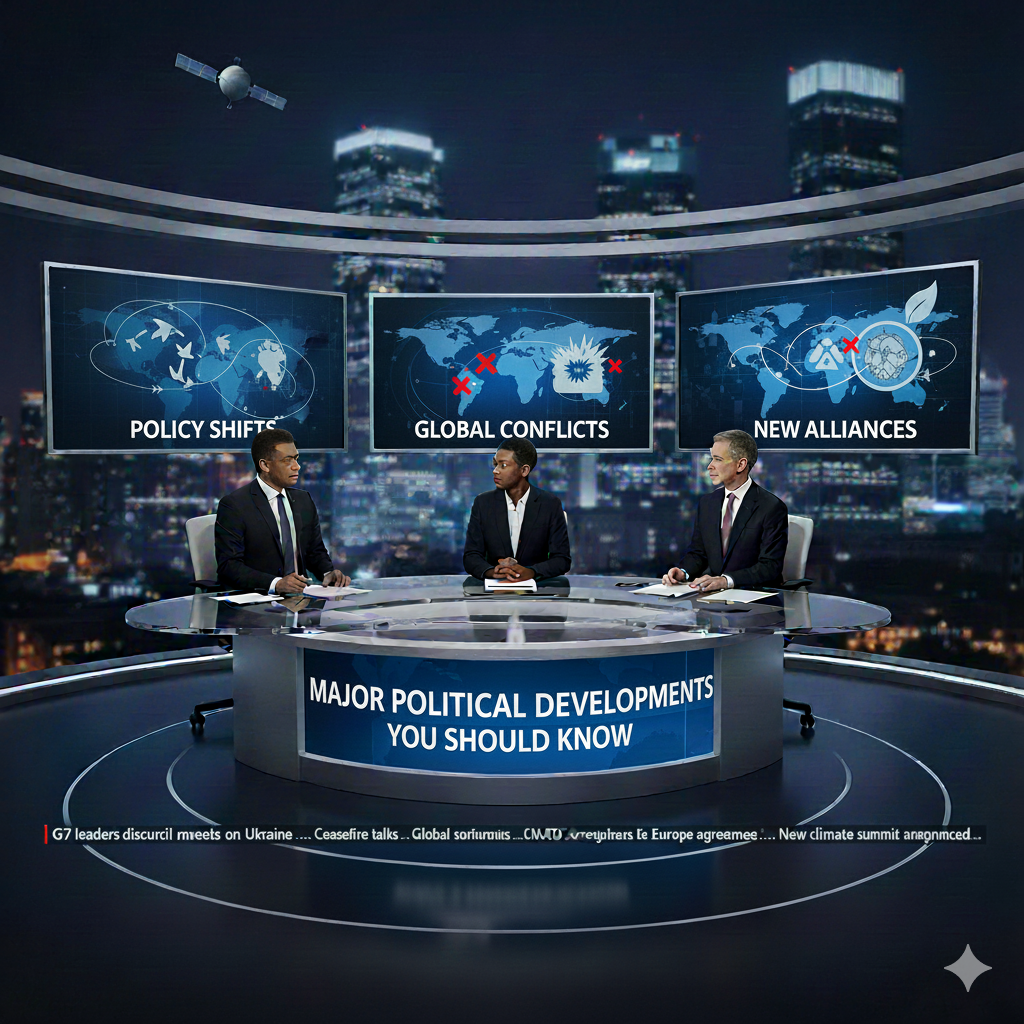
As governments around the world react to economic instability, geopolitical conflicts, technological advancements, and social demands, global power and governance are undergoing profound upheaval. Today’s national leaders make decisions that not only influence domestic policy but also redefine international collaboration, global institutions, and national power dynamics.
Changing International Power Structures
The transition from a traditional power structure dominated by a few major nations to a more multipolar world is one of the most significant trends in global governance. Regional and emerging economies are becoming more influential in global decision-making.
Governments are stepping up their engagement in international forums, fortifying regional ties, and claiming more autonomy in foreign policy. A more intricate yet inclusive international system is the result of this change in the allocation of power and the negotiation of international laws.
Reforms in Governance Worldwide
The improvement of public trust, efficiency, and transparency by governments is largely dependent on governance improvements. To face contemporary difficulties, several nations are modernizing administrative systems, bolstering anti-corruption legislation, and restructuring public organizations.
Access and accountability are being improved by digital governance initiatives like online public platforms and e-government services. These changes affect diplomatic ties, investment confidence, and global perceptions.
Leadership in Policy and Economic Power
Global power is largely shaped by economic decisions. To safeguard national interests and foster growth, governments are modifying industrial plans, trade laws, and fiscal policies.
By making investments in industry, infrastructure, and technology, nations are improving their economic standing and expanding their influence internationally. Global markets and regional power dynamics are also changing as a result of trade agreements and economic relationships.
Diplomatic and Foreign Policy Developments
A fundamental component of global power and governance is still foreign policy. In response to regional crises, security threats, and changing alliances, governments are reinventing diplomatic strategy.
In order to maximize strategic flexibility, many nations are implementing multi-alignment diplomacy, upholding ties with several world powers. Global cooperation and stability are still shaped by international agreements, peace negotiations, and diplomatic interactions.
Strategic Power, Security, and Defense
Global power dynamics are intimately linked to national security policy. Governments are bolstering cybersecurity measures, updating military capabilities, and raising defense funding.
Global security architecture is being influenced by strategic alliances and regional defense cooperation. These actions emphasize the value of communication and conflict avoidance in global governance even as they seek to discourage threats.
Global Leadership and Climate Governance
A new aspect of global power is climate policy. Leading governments in climate diplomacy, environmental protection, and renewable energy are becoming more well-known and powerful on a global scale.
Climate governance entails striking a balance between environmental responsibility and economic growth. Global energy markets and long-term development policies are being shaped by national sustainability programs and international climate agreements.
Data, Digital Power, and Technology
A major concern in international politics is technology governance. Governments are enacting laws pertaining to internet platforms, digital currencies, artificial intelligence, and data security.
These days, having control over data and digital infrastructure is a type of strategic power. Nations that make investments in cybersecurity and digital innovation are improving their standing both politically and economically.
International Institutions’ Function
Global government still heavily relies on international institutions like the World Bank, the United Nations, and regional blocs. Through funding, policy direction, and leadership positions, governments have an impact on these organizations.
Multilateral institutions are still crucial for tackling global issues including conflict resolution, climate change, and humanitarian disasters, even when conflicts between major nations occasionally hinder efficacy.
Strength in Crisis Management and Governance
Government reactions to crises, such wars, natural catastrophes, or economic shocks, put leadership and governance skills to the test. International credibility and public confidence are enhanced by effective crisis management.
Future international cooperation plans and governance models are being shaped by the lessons acquired from recent global crises.
In conclusion
As states address interrelated issues, global power and governance are changing quickly. The most recent advancements in world governance are changing the global order, from technological regulation and climate governance to economic leadership and diplomatic strategy.
Global security and advancement will depend on international cooperation and well-informed decision-making as power becomes more dispersed and governance gets more complicated. It is easier for citizens and governments to navigate an increasingly interconnected world when they are aware of these trends.